
What is a cataract?
The eye can be likened to a camera. Light enters the eye through the clear cornea and is focused onto the retina by the lens. The lens is surrounded by an elastic capsule. A cataract is clouding of the lens inside the eye. Cataract is not a “skin” growing over the eye.
What causes cataract?
The commonest form is part of the normal age changes in an otherwise healthy eye. Cataract can also occur as a result of injury, inflammation inside the eyeball, diabetes or the use of long term steroid medication. People differ in the age at which cataracts start and the rate at which they progress.

What are the effects of cataract?
When the lens of the eye becomes cloudy the image formed on the retina is not as clear. This results in blurred vision. Colours may lose their normal intensity and objects appear less bright. Some types of cataract make you more sensitive to bright lights with glare and dazzle, especially a problem when driving at night. Occasionally you may see two or even more images of an object out of one eye. The development of cataract can make you more short-sighted and lead to the need for frequent change of glasses. Cataract tends to progress and lead to a gradual deterioration in vision.
When do I need to have cataract surgery?
Basically when you are noticing a problem with your vision that is interfering with your life-style. People differ at the stage when they request an operation. If you do a lot of reading or fine work you may want your operation at an earlier stage than someone who spends most of their time outdoors. As surgery is becoming more advanced we tend to operate earlier than ten to fifteen years ago. You do not need to wait for the cataract to become “ripe”. Cataracts can be removed at any stage.
You need to balance of risks of cataract surgery (see later) against the benefits before deciding to go ahead with surgery.
What is phacoemulsification?
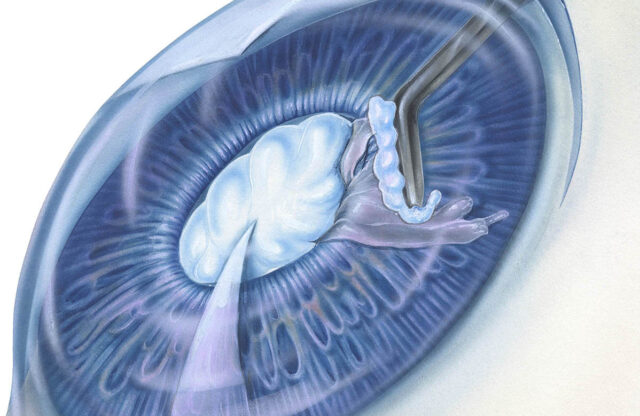
The most modern technique available today is called phacoemulsification. This uses ultrasound energy to break up or emulsify the lens inside the eye. The use of ultrasound allows the cataract to be removed through a very small incision. This means that the eye heals quickly and with minimal distortion (or astigmatism). The incision is much smaller than that used previously; the wound is stronger and glasses can be prescribed at an earlier stage.
How is the cataract removed?
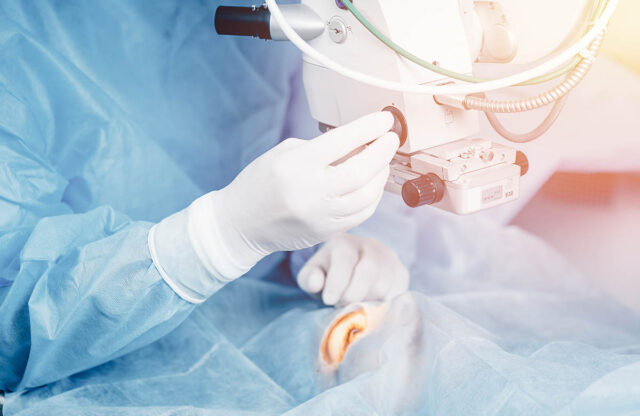
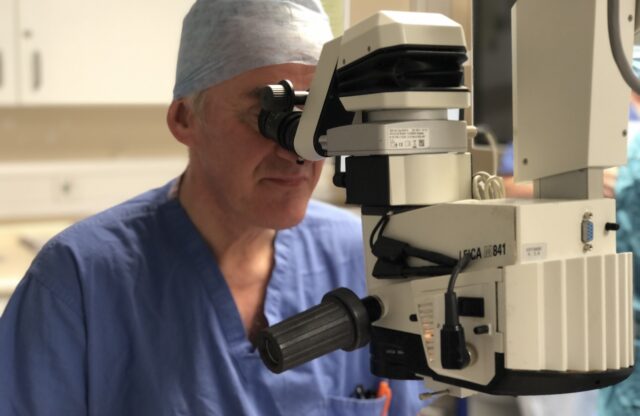
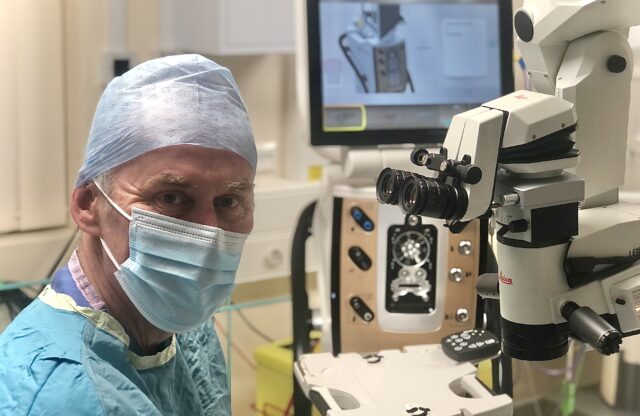
Before the operation a tiny pellet will be put into the eye to make the pupil of the eye larger. This lets the surgeon get to the cataract more easily. The surgeon looks through a microscope during the operation. A small cut is made into the eye at the edge of the cornea (the clear window of the eye). Very fine forceps are then introduced into the eye and a circular tear in the elastic capsule of the lens is made. A probe that delivers ultrasound is then introduced into the eye and dissolves away the cataract leaving the elastic capsule behind. The capsule is cleaned and then an intra-ocular implant is inserted into the capsule to take the placed of the natural lens. A foldable lens is usually used which can be put into the eye through this tiny incision. The lens unfolds inside the eye to its normal shape. Often no stitches are required as the wound is constructed in such a way that it is self-sealing. Sometimes however the surgeon may insert some stitches to make the wound more secure.

How long will the operation last?
Between 10 to 20 minutes depending on the hardness of the cataract. Your face will be covered by a special drape, which has a bag on the side to collect the fluid that is used during the operation. Don’t worry if you feel some of the fluid on the side of your face or running down into your ear. The drape is held away from your face by a pipe that delivers oxygen under the sheet so you will have no difficulty breathing.
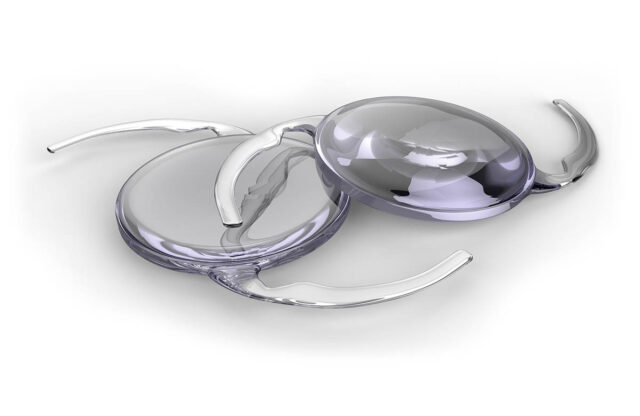
Why does the surgeon use an implant?
The natural lens of the eye focuses light onto the retina. After the cataract has been removed an artificial lens implant is needed to do this. Before implants were used very thick glasses were needed after surgery to give clear vision. The implants are made of soft acrylic plastic. They are very unlikely to cause inflammation inside the eye. Implants have been used for many years now and no major long-term problems have occurred.

Will I need to stay in hospital overnight?
No, surgery is now performed as a day-case procedure. You will need someone to take you home.
What anaesthetic will I need?
The operation is performed under a local anaesthetic.
You are awake for this kind of anaesthetic. The eye is numbed by anaesthetic drops and a small injection using a blunt tipped cannula. This sometimes stings a little but most patients feel nothing. The anaesthetic injection affects the muscles that move the eye around so that the eye is still during surgery. The vision will be temporarily blurred so you will not see the surgical instruments during the operation.
During the operation your pulse and oxygen level will be monitored by an instrument on your finger. If you like a nurse will hold your hand during the operation and you can squeeze her hand if you are uncomfortable or feel about to cough. The surgeon can then stop what they are doing and make you comfortable again before continuing the operation. During the operation you will feel the surgeon’s hands resting lightly on your forehead or cheek. You will hear noises made by the instruments used to remove the cataract and you will hear the doctors and nurses talking quietly. Try to relax. As the operation is very delicate we ask you not to talk during the surgery.
What happens following the operation?
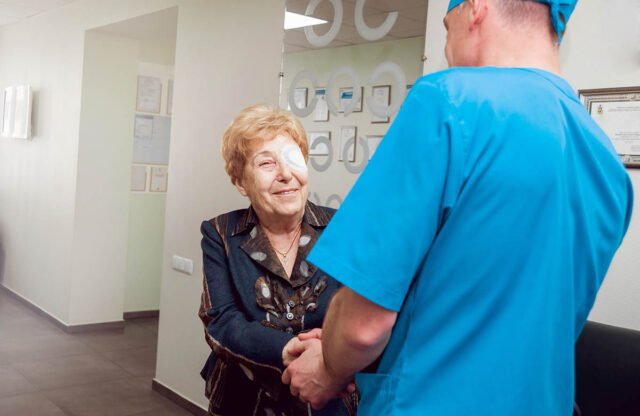
The eye has a plastic shield taped over it immediately following the operation. This can be removed the following day. As the anaesthetic wears off over the next few hours the vision will gradually return, it is quite common for you to notice double vision during this period.
Quite commonly there will be a subconjunctival haemorrhage. This is caused by bleeding from a small blood vessel on the surface of the eye that was “knicked” during the anaesthetic. This results in a red appearance on the surface of the eye, it is not harmful but can take a week or two to completely fade away.
You will be asked to return to have the eye examined a week or two later. Drops are prescribed four times a day for one month. The drops help to reduce inflammation and allow the eye to settle down quickly. The eye is not usually uncomfortable although you may experience mild irritation and foreign body sensation for a few days.


What are the dos and don'ts after the operation?
You can get back to your normal routine within a couple of days. There are no restrictions regarding reading or watching TV. You cannot damage your eyes by using them. You should avoid rubbing or touching the eye for a couple of weeks. When washing, gently wash around the eye using a clean flannel or cotton wool and then dab dry avoiding pressure on the eye. Have your hair washed with your head leaning backwards. You should avoid heavy lifting or strenuous exercise for two weeks. You can bend down as normal. It is wise to avoid swimming for a couple of weeks. If you have sedentary job you can back to this when you feel ready, usually after a day or two. If you have a manual job it is better to have a week or two off work.
What about glasses?
Glasses can be prescribed once the eye has healed. This may be anywhere between three and four weeks after the operation. You can get your new glasses as soon as one week after the operation although there is a chance that they may need to be changed again as the healing process continues. Again you will be able to discuss this with Mr Stirling or your optometrist.


Will I always need glasses?
Before your surgery measurements are made of the eye to calculate the strength of the implant that will be inserted into the eye. The surgeon usually chooses a strength that aims to give you clearest vision in the distance. Some people may not therefore need distance glasses in many situations, although for clearest possible vision glasses will often improve fine detail.
With a standard mono-focal lens implant you will need glasses for reading and close work even if your distance vision is good without glasses. Standard mono-focal lens implants do not correct astigmatism and if you have significant astigmatism you will require glasses for both distance and near after surgery. See section on freedom from glasses below.
Freedom from Glasses - Premium Lens Implants
Recently there have been advances in intra-ocular lens design and the aim now can be to give patients freedom from glasses for both near and distance. These are called multifocal and extended depth of field intra-ocular lenses. These implants also correct astigmatism. Multifocal and extended depth of field intra-ocular lenses are not available on the NHS but are available through self funding or possibly private insurance. If you would like to discuss this further please ask Mr Stirling.

What are the risks?
No surgical operation is without a degree of risk. Fortunately modern phacoemulsification cataract surgery has a low rate of complications. If complications do occur most can be successfully managed.
The chance of the vision not being as good after the operation as it was before is in the region of 1 in 100. There are various reasons why the operation may not be a success. These include clouding of the cornea, cystoid macula oedema (inflammation of the central retina), retinal detachment, bleeding inside the eye and infection (1 in 1000). Occasionally there is a tear in the bag which holds the lens in place during the operation. This results in the jelly behind the lens (vitreous gel) coming forward and this will need to be removed at the time of surgery. If this occurs, stitches are usually needed to close the wound and the procedure takes longer than usual. Very occasionally part of the cataract can fall backward into the eye and require further surgery to remove it at a later date. If this occurs the surgeon may elect not to put an implant in although this can usually be done at a later date.
Cataract Surgery in Eyes with other problems.
There are many other conditions that can occur in the eye alongside cataract. The most common of these is ageing change at the back of the eye (macula degeneration). Other causes may be glaucoma or blockage of one of the blood vessels in the eye. In these situations your doctor may be cautious about promising too much improvement in vision following surgery. In these situations it can be difficult to predict if the vision will improve until after the cataract has been removed.


Will the cataract grow back?
No, once the cataract has been removed it will not return. Sometimes after a few months or even years the capsule that the intraocular lens sits in becomes thickened. This may result in reduced vision again. It is a simple matter to treat this with laser. This splits the thickened capsule and usually returns the vision to what it was before the thickening occurred. This is called a YAG laser capsulotomy and only takes a few minutes. A numbing drop is put into the eye before the procedure and then a contact lens placed temporarily on the front of the eye. It is not uncomfortable.